
Share your box type, dimensions, materials, target output and factory conditions. Horda will help evaluate the suitable machine configuration for your project.

Horda connects feeding, gluing, board positioning, four-side folding, inline transfer and inner lining into one continuous workflow. This reduces the manual loading, alignment, folding and transfer work normally required between separate production stages.
Our goal is not simply to reduce the number of operators, but to establish more stable production processes, automate repetitive tasks, and enable operators to focus on material preparation, quality inspection, and production control.
With the reference QZFM-700/1000A configuration, a suitable connected line can be operated by 1 operator, with a rated speed of 15–25 pcs/min and a theoretical eight-hour output of 7,200–12,000 pieces. Actual staffing and output depend on box structure, dimensions, materials, changeovers and operating conditions.
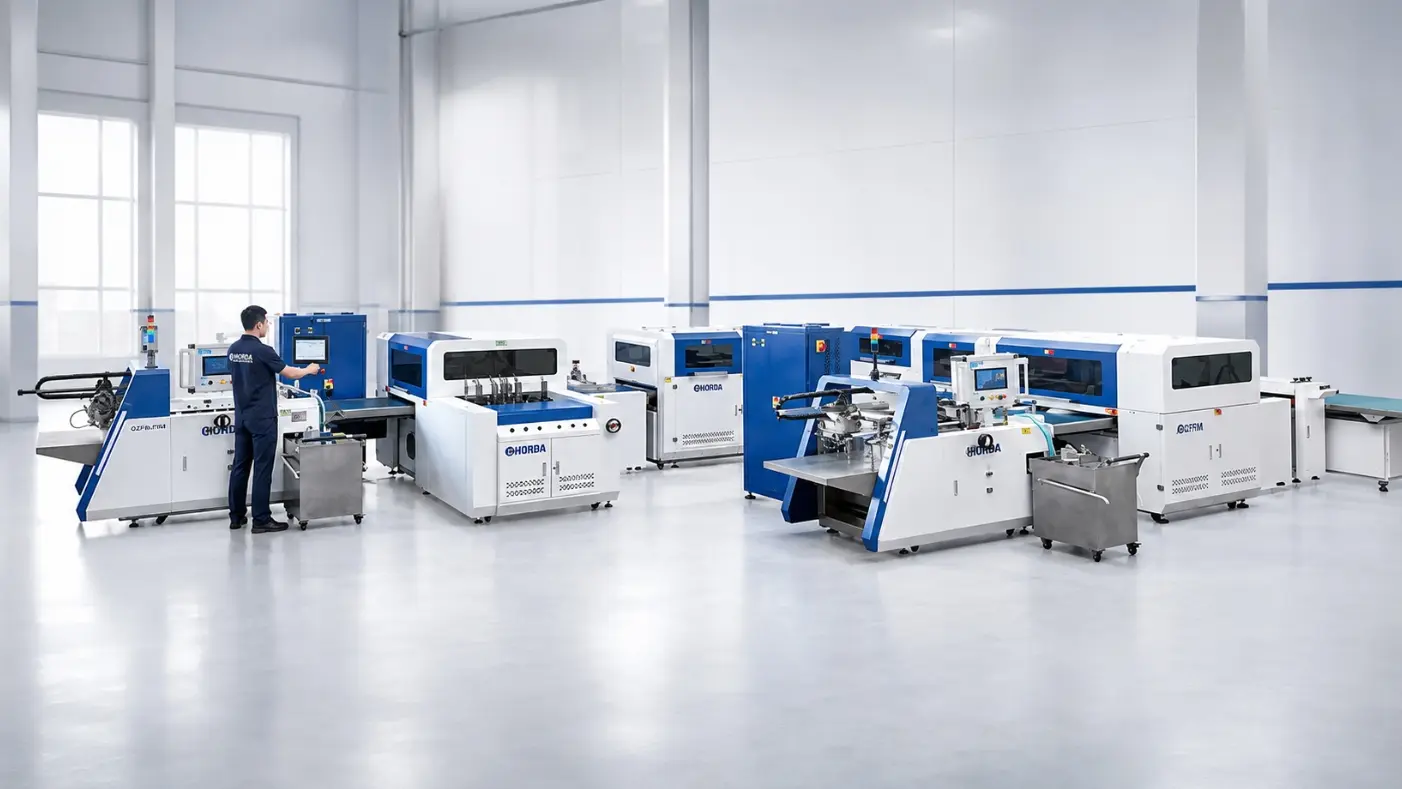
How Horda Reduces Manual Work
Labour savings come mainly from removing repeated work between processes rather than simply increasing machine speed.
-
Automatic feeding and gluing: Covering paper is fed and glued under controlled machine settings, reducing continuous manual feeding.
-
Automatic board positioning: Greyboard components are positioned mechanically, reducing manual alignment and repeated correction.
-
Mechanical four-side folding: Edges and corners are folded by the machine instead of being formed repeatedly by hand.
-
Inline transfer and inner lining: Finished cases move directly to the next process without collection, stacking and reloading between machines.
Planned Around Your Product and Workflow
Horda reviews the box type, dimensions, greyboard thickness, covering paper, lining material, existing equipment and production target before recommending a configuration. This helps place automation where it produces practical labour savings without adding unnecessary equipment.
- Box type, dimensions and board thickness
- Covering paper, lining material and adhesive
- Existing machines and current process route
- Operators used in each production stage
- Daily output and changeover requirements
For a new production line, the main processes can be configured as one connected workflow. For an existing factory, suitable equipment can be retained while selected labour-intensive processes are upgraded first.
Frequently Asked Questions
Does labour reduction require a fully automatic production line?
No. Automation can begin with the processes that involve the most repeated handling and expand later through compatible connections.
Can the upgrade be completed in phases?
Yes. A factory can improve one process first and reserve suitable space and interfaces for later automation.
How many operators are required?
A suitable linked case-making and inner-lining configuration can be operated by one person. The final requirement depends on the box, materials, feeding arrangement and inspection standard.
What output can the line achieve?
The reference QZFM-700/1000A configuration is rated at 15–25 pieces per minute. Actual output varies with the product and operating conditions.
Can Horda work with existing machines?
Yes. Horda can review the function, operating direction, speed range and interfaces of existing equipment before recommending which processes to retain, upgrade or connect.
