
Inside an Oversized Foldable Rigid Box Project for Luggage Packaging
Rigid boxes are commonly used for watches, cosmetics, electronics and other compact premium products. But what happens when the product inside is a full-size wheeled suitcase?
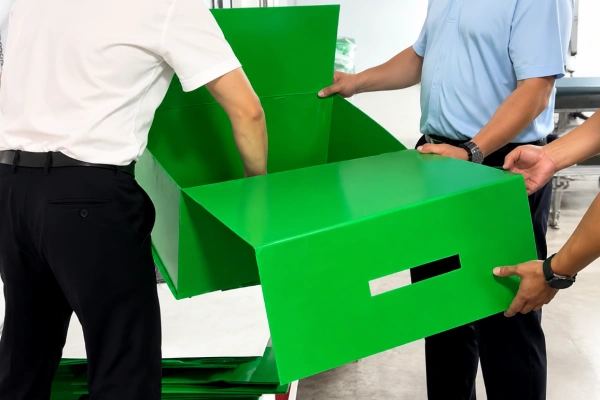
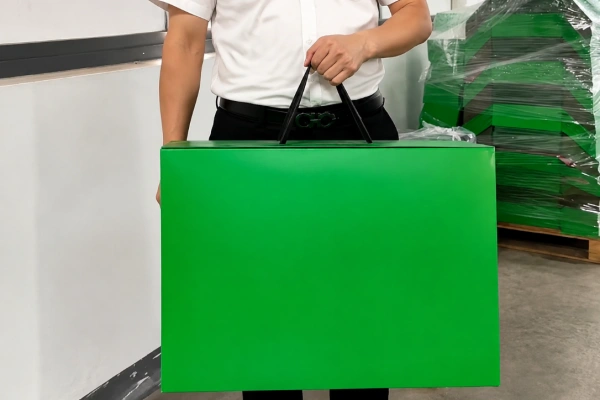
A Horda customer recently presented exactly this requirement: an oversized foldable rigid box developed for luggage packaging. The project required a large-format machine capable of processing case components up to 750 × 1350 mm. After assembly, the finished box reached 850 mm in length and 260 mm in height, while the complete foldable structure extended beyond two metres when laid flat.
The finished package was large enough to hold a wheeled suitcase. This was not simply an oversized display sample. The customer ordered the machine to produce packaging for an actual luggage brand, making the project a practical example of how large-format equipment can extend rigid packaging into new applications.
An Oversized Box with a Real Packaging Purpose
| Project Item | Requirement |
|---|---|
| Packaging application | Wheeled suitcase and luggage packaging |
| Box structure | Oversized foldable rigid box |
| Largest case or cover format | Up to 750 × 1350 mm |
| Confirmed assembled dimensions | 850 mm long and 260 mm high |
| Overall flat span | More than 2,000 mm |
| Main objective | Premium presentation with a foldable, space-efficient structure |
These measurements describe different parts and stages of the packaging. The 750 × 1350 mm figure refers to the large-format case or cover component processed by the machine. It should not be read as the length and width of the assembled box. The 850 mm length and 260 mm height refer to the finished package, while the measurement exceeding two metres describes the complete structure when laid out.
Why Foldable Rigid Packaging Matters More at This Scale
A conventional setup rigid box retains its full three-dimensional form from the moment it leaves the packaging factory. This is manageable for small gift boxes, but the storage and transport burden increases rapidly when the package becomes large enough to hold a suitcase.
An empty luggage packaging box measuring hundreds of millimetres in each direction occupies substantial space before any product is placed inside it. Shipping large quantities of fully assembled boxes would mean using cartons, pallets and warehouse positions to transport mostly empty volume.
A foldable rigid box changes this logistics model. Its covers, walls and lined components can remain flat during storage and transport, then be erected closer to the filling, retail or fulfilment location. After assembly, the box still provides the substantial appearance and presentation expected from premium rigid packaging.
The actual storage and freight benefit depends on the flat-pack thickness, outer-carton arrangement, pallet pattern, shipment quantity and assembly method. For an oversized box, these factors should be evaluated during the structural design stage rather than after production has already begun.
The Main Challenge Is the Flat Structure, Not Only the Finished Box
Machine selection is often based only on finished box length, width and height. That approach is not sufficient for an oversized foldable rigid box.
An 850 mm-long finished box may require a much larger flat production format once the lid, base, walls, folding sections and connecting panels are arranged. In this project, the full foldable structure extended beyond two metres. Different sections therefore had to be considered according to the individual dimensions and the process used to produce them.
This is why an oversized project must be evaluated in two states:
- The flat components that enter the production process
- The assembled box that must fit, protect and present the product
The machine must accommodate the required case or cover format, while the complete production route must maintain the correct relationship between all components after folding and assembly.
What Must Be Controlled in Large-Format Production?
Stable Feeding of Large Covering Materials
Large sheets have more opportunity to skew, curl or shift during feeding. The covering material must remain stable through conveying and gluing so that the board can be positioned correctly. Uneven feeding or adhesive application that may be less noticeable on a small box can create visible defects across an oversized surface.
Accurate Multi-Board Positioning
A foldable rigid box usually contains several related board sections rather than one simple piece of greyboard. Each section must be placed in the correct position and at the correct distance from the next.
When the structure becomes longer, small positioning differences can accumulate across multiple panels. This may affect the folding path, corner alignment, final dimensions and overall squareness of the assembled box.
Consistent Hinge and Panel Spacing
The gaps between board sections allow the walls and covers to move. If a gap is too narrow, the covering material may tighten, wrinkle or resist movement during assembly. If it is too wide, the finished structure may feel loose or fail to align correctly.
The required spacing depends on the board thickness, covering material, adhesive layer and folding direction. At luggage scale, the longer panels create additional leverage during assembly, making consistent hinge spacing especially important.
Controlled Wrapping of Long Edges
Oversized premium packaging has a large visible surface and long exposed edges. Covering paper must be folded evenly without loose areas, bubbles, lifted edges or excessive tension. Pressing and transfer stages must also protect the finished surface from scratches, indentation and adhesive marks.
Stable Handling Between Processes
A large case or cover is more difficult to transfer than a small rigid box component. Feeding, positioning, folding, pressing and discharge must work as a coordinated process so that the material does not sag, shift or contact surfaces that could damage the finish.
Customizing the Machine Around the Box
For a project of this scale, choosing a machine from a standard specification table is only the beginning. The production method needs to be developed around the approved box structure, materials and finished result.
Horda evaluates the assembled dimensions, unfolded layout, board arrangement, covering materials, hinge design, closures, inserts and target output before defining the equipment configuration. Representative materials and samples can then be tested to verify feeding, gluing, positioning, folding, pressing and assembly behaviour.
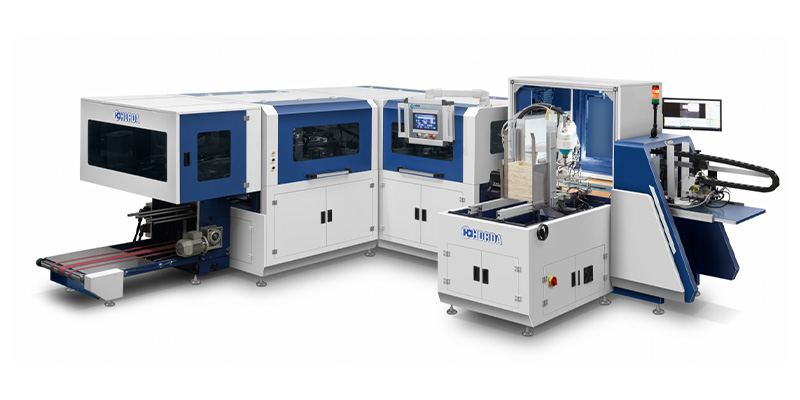
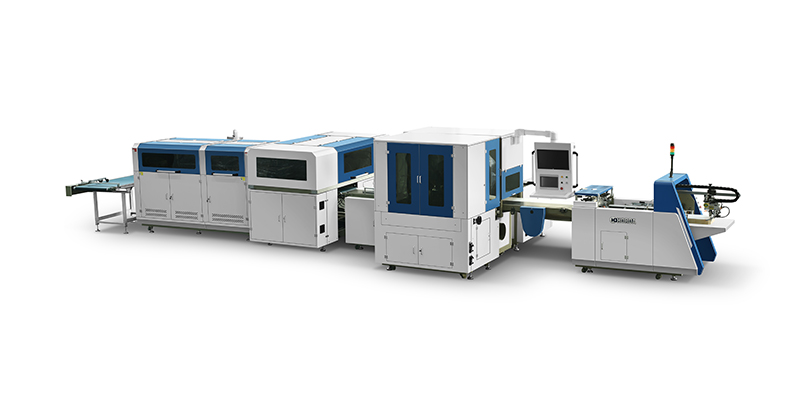
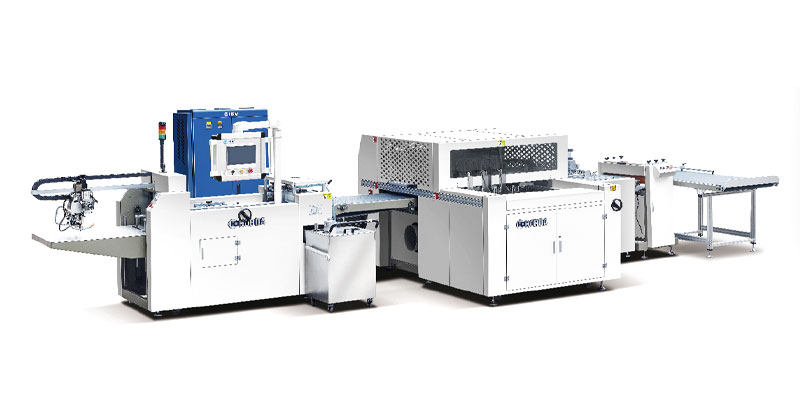
Horda's large-format automatic hardcover box machine supports case formats up to 750 × 1350 mm, with automated paper feeding, gluing, board positioning and four-side edge folding. Depending on the final structure, the wider production route may also include dedicated foldable rigid box equipment for covers, wings, linings and other components.
It is important to define what enters and leaves each machine. One machine may produce the large case or cover used in the box without completing every subsequent assembly operation. Separating these production stages helps buyers understand the complete process instead of judging the project from one machine specification.
What Does This Project Show the Rigid Box Industry?
The suitcase box is visually striking, but its significance extends beyond its size. It demonstrates that premium rigid packaging is no longer limited to small luxury products.
Large foldable rigid boxes may also be considered for:
- Luggage and travel products
- Premium apparel and coordinated clothing sets
- Footwear collections and leather goods
- Home textiles and bedding products
- Large electronics or accessory kits
- Presentation, promotional and collector sets
For these products, a foldable structure can combine a premium presentation with more practical storage and distribution. However, the box must be designed for production from the beginning. Simply enlarging an existing small-box drawing does not address material handling, panel alignment, structural support or assembly behaviour.
What Information Is Needed for a Similar Project?
Packaging manufacturers evaluating an oversized rigid box project should prepare:
- Finished box length, width and height
- Dimensioned flat layouts for all covers, walls, wings and linings
- A physical sample, prototype or structural drawing
- Greyboard thickness and the number of board sections
- Covering paper, laminated material or other surface specifications
- Hinge gaps, folding sequence and assembly method
- Magnetic closures, tabs, handles, inserts and supporting components
- Required output, order quantity and changeover frequency
- Available factory space and equipment that needs to be connected
Both assembled and unfolded dimensions should be supplied. These measurements answer different production questions and may lead to different machine, tooling and line configurations.
From an Oversized Idea to Repeatable Production
Producing one oversized box by hand can demonstrate a concept. Manufacturing the same structure repeatedly requires stable material handling, controlled panel spacing, consistent wrapping and a production process developed around the actual box.
This luggage packaging project shows how an oversized foldable rigid box can deliver substantial product presentation while remaining practical for storage, transport and final assembly. It also reflects Horda's approach to customized production: begin with the product and box structure, define the critical flat and assembled dimensions, verify the materials and processes, and configure the equipment around the approved result.
If your project exceeds a standard rigid box machine format, submit the finished dimensions, unfolded drawings, materials, target output and available samples through Horda's Machine Assessment. Horda will evaluate whether a large-format machine, customized configuration or integrated production route is suitable for the required box.