
Blog

What Is a Rigid Box? Types, Materials, Uses & How It’s Made

A rigid box is a sturdy paperboard package built from thick board, usually greyboard or chipboard, and wrapped with decorative paper or another surface material. Most rigid boxes are pre-formed and keep their shape instead of folding flat like a standard folding carton. They are widely used for premium gifts, cosmetics, jewelry, electronics and other products where both protection and presentation matter.

Rigid boxes are also called set-up boxes or paper-over-board boxes. A conventional rigid box stays erected after production. A collapsible rigid box is the main exception: it uses rigid board panels but is designed to fold flat for storage and transport.

The simplest way to understand rigid packaging is to look at four things: its structure, the board inside it, the outer wrap, and how the parts are assembled. Once those are clear, the differences between box styles become much easier to understand.

Key Takeaways

  • Rigid boxes use thick paperboard for structure and a separate wrap for appearance.
  • Most rigid boxes arrive already formed, while folding cartons usually ship flat.
  • Common structures include lid-and-base, book-style, magnetic, drawer, shoulder/neck and collapsible boxes.
  • Board thickness, wrap material, insert design and finishing all affect cost, appearance and performance.
  • Rigid box production is a sequence of processes rather than one universal machine step.
  • A better rigid box is not always a heavier box. Its structure should match the product, logistics and production requirements.

What Makes a Box “Rigid”?

A box is called rigid because its main body is made from dense board that keeps a stable shape. The board is much thicker and stiffer than the paperboard commonly used for folding cartons.

In many premium packaging applications, the structural board is around 1.5–3 mm thick, although there is no universal thickness. The correct board depends on the size of the box, its structure, the weight of the product and the required stiffness.

The rigid board itself is normally not the visible finished surface. It is covered with printed paper, specialty paper, kraft paper or another decorative wrap. Depending on the design, the inside may also be lined and fitted with an insert to hold the product in position.

Simple definition: The rigid board creates the structure. The outer wrap creates the visible finish. Other components, such as liners or inserts, can be added depending on the packaging design.

Rigid Box vs Folding Carton

The biggest difference between a rigid box and a folding carton is structural. A rigid box is normally formed before it reaches the packing stage, while a folding carton is designed to ship flat and be erected later.

This difference affects storage, freight volume, material use, protection, production methods and the way the package feels when handled.

Factor Rigid Box Folding Carton
Structure Thick board that normally keeps a fixed shape Thinner paperboard designed to fold
Delivery Form Usually arrives pre-assembled Usually ships flat
Protection Good shape retention for presentation packaging Suitable for many lighter retail products
Storage & Freight Uses more volume unless designed to collapse Efficient because cartons can ship flat
Appearance Common in premium, gift and presentation packaging Common across mass retail and everyday products
Cost Usually higher because of materials and multi-step production Usually lower for comparable simple packaging
Best Fit When presentation, stiffness and reuse matter When low weight, flat shipping and efficiency matter

Neither format is automatically better. A rigid box is often more suitable when the package itself is part of the product experience. A folding carton can be more practical when flat shipping, low weight and efficient high-volume packing are the main priorities.

Common Types of Rigid Boxes

Rigid box is a broad packaging category rather than one single structure. Different types are usually identified by how the lid, base, tray, sleeve or cover move in relation to each other.

Lid-and-Base Rigid Box

A lid-and-base rigid box consists of a separate lid and base. The lid fits over or onto the lower tray. It is one of the most familiar rigid packaging structures.

Typical uses: Gift sets, cosmetics, confectionery, accessories and presentation kits.

Book-Style or Hinged Rigid Box

A book-style rigid box opens from one side like a book. A flat covered case creates the outer cover and hinge, while an inner tray is fixed to the case.

Magnets may be added to the structure, but a book-style rigid box does not necessarily need a magnetic closure.

Typical uses: Electronics, jewelry, cosmetics, premium gifts and product launch kits.

Magnetic Closure Rigid Box

A magnetic rigid box commonly uses hidden magnets and metal pieces to hold a hinged cover closed. This creates a controlled opening and closing action that is often associated with premium presentation packaging.

Typical uses: Luxury gifts, cosmetics, electronics and reusable presentation packaging.

Drawer Rigid Box

A drawer rigid box has an inner tray that slides into an outer sleeve. A ribbon or pull tab can be added to make the tray easier to remove.

Typical uses: Jewelry, small electronics, cosmetics, stationery and accessories.

Shoulder and Neck Rigid Box

A shoulder or neck rigid box uses a raised inner section inside the base. Part of this inner neck remains visible between the lid and base when the box is closed.

Typical uses: Perfume, jewelry, premium beverages and high-end gift packaging.

Collapsible Rigid Box

A collapsible rigid box uses rigid board panels connected by flexible sections, wings or folding joints. The box can remain flat during storage and transport and then be erected before use.

This structure combines the appearance and stiffness of rigid packaging with more efficient empty-box logistics.

Typical uses: E-commerce gift programs, larger packaging, international supply chains and projects where freight volume is important.

What Materials Are Used in Rigid Boxes?

Most rigid boxes are built from several materials rather than one single sheet. The main elements usually include a structural board, an outer wrapping material and, depending on the design, an inner liner, insert or closure component.

1. Rigid Board Core

Greyboard or chipboard is commonly used as the structural core of a rigid box. Its main purpose is to provide stiffness, dimensional stability and edge strength.

Thicker board can make a box feel more substantial, but excessive thickness does not automatically improve the package. It can increase material use, finished weight, grooving requirements and wrapping difficulty.

The board specification should therefore match the box dimensions, product weight and structural design rather than simply using the thickest board available.

2. Outer Wrap

The outer wrap is the visible surface of the rigid box. This is where much of the visual difference between two otherwise similar rigid boxes is created.

Common wrapping materials include:

  • Printed coated paper
  • Uncoated paper
  • Specialty textured paper
  • Kraft paper
  • Linen or fabric-like wrapping material
  • Soft-touch laminated paper
  • Leather-effect or other decorative specialty paper

The wrapping material needs to work correctly with printing, adhesive, folding and corner wrapping. A visually attractive material is not necessarily suitable for every rigid box production process.

3. Inner Lining

An inner liner can be applied over the inside board to create a cleaner and more finished appearance. Lining materials may use matching or contrasting paper depending on the packaging design.

Not every rigid box requires a separate liner. Whether it is used depends on the structure, visible internal surfaces and required finish.

4. Inserts

An insert keeps the product positioned inside the package and can also provide cushioning or compartment separation.

Common insert materials include paperboard, molded pulp, corrugated paper structures and foam. Material selection should consider product protection, presentation and end-of-life separation.

5. Closures and Additional Components

Magnets, metal plates, ribbons, pull tabs, handles and other components may be added to change how the box opens or how the product is presented.

Every additional component also changes the production process. It may introduce extra positioning, assembly and tolerance requirements, so these features should have a clear functional or design purpose.

Printing and Finishing Options for Rigid Boxes

Graphics are normally applied to the outer wrapping material before it is mounted onto the rigid board. This allows rigid packaging to combine a thick structural core with higher-quality printed and decorative surfaces.

Common printing and finishing options include:

  • Offset or digital printing for graphics, colors and branding.
  • Matte or gloss lamination for surface protection and appearance.
  • Soft-touch finishing for a smoother tactile effect.
  • Hot foil stamping for metallic or colored decorative details.
  • Embossing and debossing for raised or recessed graphics.
  • Spot UV for selective gloss contrast.
  • Textured specialty paper when the material itself creates the visual effect.

Finishing should be confirmed together with the wrap material and box structure. A surface treatment that performs well on a flat printed sheet may behave differently after the paper is glued, folded and wrapped around thick board.

How Is a Rigid Box Made?

Rigid box manufacturing usually involves several stages, including structural preparation, board processing, wrapping, forming and final assembly. The exact process depends on the box structure.

A conventional lid-and-base rigid box, a magnetic book-style box and a collapsible rigid box may all belong to the same broad packaging category, but they do not follow exactly the same manufacturing route.

1. Structural Design

Production begins with the finished box dimensions, opening method, lid fit, board thickness, insert design and required tolerances.

For hinged and collapsible structures, the spacing between different board panels must also be defined because these gaps determine how the structure folds and moves.

2. Board Cutting and Grooving

Large sheets of rigid board are cut into blanks, strips or individual panels according to the required structure.

Grooves or prepared folding areas may be added when thick board must bend cleanly. Accurate board preparation is important because small dimensional errors at this stage can affect lid fit, corner alignment and final box shape.

3. Wrap Printing and Surface Finishing

The covering paper is normally printed and finished before it is attached to the board.

Registration becomes especially important when graphics need to align with box edges, center lines, hinges, windows or several separate board panels.

4. Shell or Case Forming

The next process depends heavily on the box structure.

For conventional three-dimensional lid-and-base boxes, prepared board blanks can be formed into shells and secured at the corners before wrapping.

Book-style, magnetic and many collapsible rigid boxes instead use a flat case made from several board panels positioned accurately on one covering sheet.

5. Gluing and Positioning

Adhesive is applied to the covering material, after which the rigid board or prepared shell is positioned on the glued sheet.

Positioning accuracy affects visible border width, graphic registration, hinge gaps and overall appearance. Poor positioning can create shifted artwork or inconsistent edges even if the materials themselves are correct.

6. Wrapping and Edge Folding

The decorative paper is wrapped around the board or box shell. The edges are then turned over and folded around corners.

Clean corners, consistent turn-ins and flat wrapped surfaces are important visible quality points, especially on premium rigid packaging.

7. Lining, Assembly and Inspection

Depending on the structure, the wrapped component may then receive an inner liner, tray, neck, shoulder, magnets, ribbons or other components.

The completed packaging should be inspected for lid fit, alignment, opening movement, surface condition and overall consistency before packing.

Production Note: There is no single rigid box machine that performs every possible process for every rigid box structure. Equipment should be evaluated according to what enters the machine, which operations it performs and what product or component leaves the machine.

Where Rigid Box Machines Fit into Production

Automation can improve repeatability in processes that would otherwise depend heavily on manual positioning, gluing, folding or handling.

Depending on the rigid box structure, machinery may be used for board preparation, paper gluing, case making, board positioning, corner pasting, wrapping, lining or final assembly.

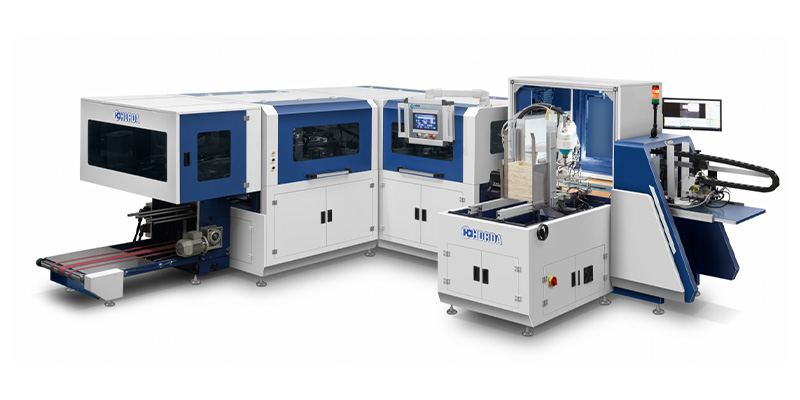
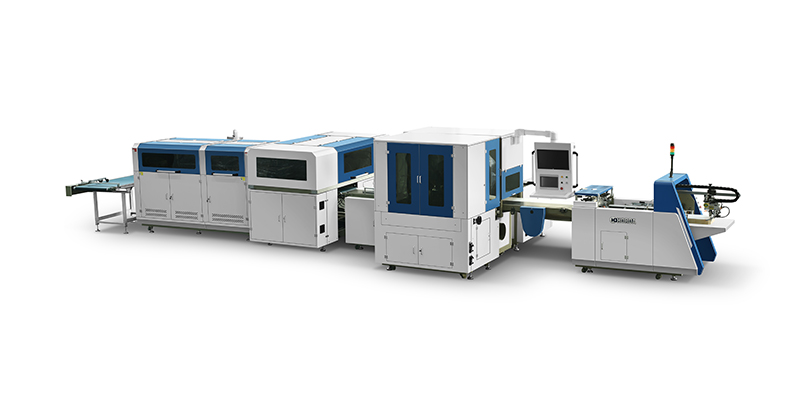
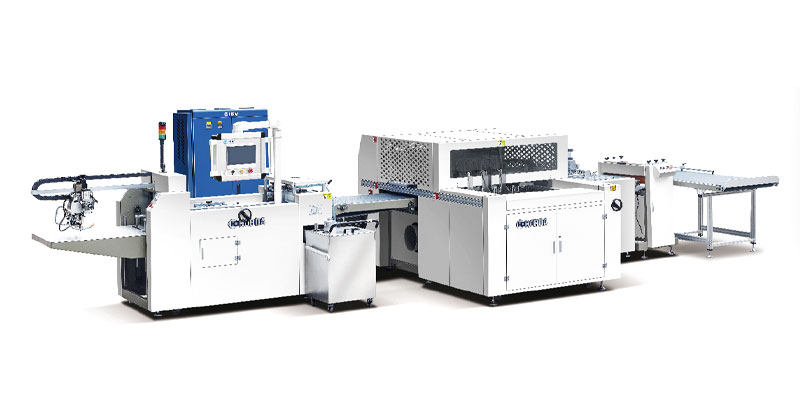
For example, HORDA's rigid box making machine range includes equipment for processes such as cover feeding, gluing, board positioning and four-side folding for rigid box covers and other paper-over-board products.

The correct machine configuration still depends on the box structure, working dimensions, covering materials, required output and which upstream or downstream production stages are already available.

This distinction is important when comparing equipment. A case-making machine may produce the flat wrapped cover for a magnetic or book-style box, while production of the inner tray, installation of magnets, lining and final assembly can remain separate operations.

Rigid box equipment should therefore be compared by its actual process scope rather than by a broad machine name alone.

What Are Rigid Boxes Used For?

Rigid boxes are used when the package needs to provide more than basic containment. They are particularly suitable when product presentation, shape retention, gifting, repeat opening or shelf presence are important.

  • Cosmetics and fragrance: perfume boxes, skincare sets and presentation kits.
  • Jewelry and watches: compact boxes with fitted inserts and controlled opening.
  • Consumer electronics: device packaging and premium accessory kits.
  • Food and confectionery: chocolates, specialty foods, tea and gift assortments.
  • Fashion and accessories: belts, scarves, wallets, eyewear and presentation sets.
  • Corporate and promotional packaging: launch packs, sample kits and premium gifts.
  • Collectibles and limited editions: packaging designed to remain with the product after purchase.

Advantages of Rigid Boxes

  • Better shape retention than ordinary folding cartons.
  • Premium presentation before the product is opened.
  • Suitable for inserts, compartments, magnets and more complex opening structures.
  • Large wrapping surfaces for printing and decorative finishing.
  • Potential for reuse when the structure is durable enough to keep.
  • A wide range of structural options from simple two-piece boxes to collapsible and magnetic designs.

Limitations of Rigid Boxes

  • Higher material and converting cost than simple folding cartons.
  • Conventional rigid boxes consume more storage and freight volume because they remain assembled.
  • Additional production stages create more opportunities for fit, alignment or surface defects.
  • Magnets, foam, plastic trays and mixed materials can make material separation more complicated.
  • Using thicker board does not automatically provide better protection if the overall structure or insert is poorly designed.

What Determines Rigid Box Cost?

Rigid box cost is determined by the complete specification rather than the external dimensions alone.

Two boxes with the same dimensions can have significantly different production costs if one uses a simple lid-and-base structure with printed paper while another includes specialty wrapping paper, a raised neck, magnets, foil stamping and a custom insert.

Cost Driver Why It Matters
Box Structure More components, hinges, shoulders or moving parts require additional material and production processes.
Board Thickness & Size Larger boxes and heavier board increase material consumption and handling requirements.
Outer Wrap Specialty and textured materials can increase material cost and may require different handling.
Printing & Finishing Foil stamping, embossing, lamination and other finishes add production stages and setup.
Insert Custom paperboard, molded pulp, foam or multi-part inserts require additional material or tooling.
Order Quantity Setup and tooling costs are distributed across the production quantity.
Tolerance Requirements Tight lid fit, narrow borders and precise graphic alignment require stronger production control.
Storage & Logistics Conventional rigid boxes use more shipping volume, while collapsible structures may reduce empty-box freight volume.

How to Choose the Right Rigid Box

Start with the product and supply chain rather than choosing the most decorative box first.

A practical rigid box specification can be developed in the following order:

  1. Define the product dimensions, weight and areas that require protection.
  2. Choose the opening structure: lid-and-base, drawer, hinged, magnetic, shoulder/neck or collapsible.
  3. Select the board thickness according to the size and stiffness requirements instead of automatically choosing the thickest board.
  4. Decide whether the box will ship assembled or whether flat-pack logistics are important.
  5. Define the insert before confirming the final internal dimensions.
  6. Select a wrapping material that is compatible with printing, adhesive, folding and wrapping.
  7. Add decorative finishing only where it contributes to the required visual effect.
  8. Confirm fit, movement, appearance and production tolerances using physical samples before mass production.

Common Rigid Box Design Mistakes

Choosing the Structure Before Understanding the Product

A premium-looking structure can still perform poorly if the insert does not hold the product correctly or if the opening method is inconvenient.

Using Board That Is Unnecessarily Thick

Increasing board thickness adds material, weight and forming difficulty. It should create a useful structural benefit rather than simply making the package heavier.

Ignoring Empty-Box Logistics

Traditional rigid boxes occupy their full finished volume during storage and transportation. This becomes increasingly important as box dimensions increase.

If empty-box logistics are a major concern, a collapsible rigid box may be worth evaluating.

Treating Artwork as a Flat Printing Problem

The covering sheet will eventually wrap around edges, corners, spines or hinges. Important graphics must therefore be positioned according to the finished three-dimensional structure rather than only the flat artwork.

Adding Too Many Mixed Materials

Magnets, foam, plastic trays, ribbons and metal components may improve presentation, but they can also increase assembly complexity and make end-of-life material separation more difficult.

Approving Appearance but Not Function

A production sample should be checked for more than visual appearance.

Important functional checks can include lid fit, opening force, hinge movement, insert fit, alignment, corner condition, surface resistance and repeated opening and closing.

Are Rigid Boxes Recyclable?

Paper-based rigid boxes can be designed with recycling in mind, but recyclability depends on the complete construction rather than the rigid board alone.

Greyboard and paper wrapping materials are primarily paper-based. Recycling can become more complicated when the packaging includes permanent magnets, foam inserts, plastic trays, fabric, metal hardware or laminates that are difficult to separate.

For a simpler end-of-life design, manufacturers and packaging buyers can reduce unnecessary mixed materials, use removable components where practical and prioritize paper-based parts that can be separated more easily.

A reusable rigid box may also remain useful for longer, but reuse and recyclability are different characteristics and should not be treated as the same environmental claim.

Frequently Asked Questions

Is a rigid box the same as a cardboard box?

No. A rigid box is a specific type of paperboard packaging. “Cardboard box” is a broad everyday term that may also describe folding cartons or corrugated shipping boxes.

A rigid box normally uses dense rigid board covered with a separate wrapping material.

Is a rigid box the same as a set-up box?

In most packaging contexts, yes. The term “set-up box” commonly refers to a conventional rigid box that remains erected after manufacture.

A collapsible rigid box should normally be identified separately because it is designed to fold flat.

Can a rigid box fold flat?

A conventional rigid box does not normally fold flat, but a collapsible rigid box can.

A collapsible structure uses rigid board panels combined with flexible joints, wings or other folding features so the packaging can remain flat during transport and be erected later.

Are magnetic boxes rigid boxes?

They can be. A magnetic closure describes the closing method rather than the structural material.

If the main packaging structure is made from rigid board, a magnetic book-style or hinged box belongs to the rigid box category.

Are rigid boxes good for shipping?

Rigid boxes provide good presentation and structural support, but they are usually presentation packaging rather than the only transport packaging.

For parcel delivery or export shipping, an outer corrugated shipping carton is commonly used to protect both the product and the finished rigid box.

What products are best for rigid boxes?

Rigid boxes are most suitable when stiffness, presentation, protection or repeated use justifies the additional material and converting cost.

Common applications include cosmetics, fragrances, jewelry, consumer electronics, premium foods, gift sets and limited-edition products.

How thick is a rigid box?

The structural board is commonly around 1.5–3 mm thick in many premium rigid box applications, but there is no single standard thickness for every box.

The appropriate thickness depends on the box dimensions, structure, product weight, opening method and required stiffness.

Can one machine make every rigid box style?

No. Lid-and-base, book-style, drawer, shoulder, round and collapsible rigid boxes have different structures and may require different forming, case-making, wrapping, lining or assembly processes.

Final Takeaway

A rigid box is best understood as a structured paperboard package built around a stiff board core and a separate decorative outer wrap. Its value comes from the combination of structure, presentation, opening experience and product fit rather than simply using thicker material.

For packaging buyers, the right rigid box starts with the product, required structure and logistics. For manufacturers, consistent production depends on controlling board preparation, positioning, wrapping, forming and assembly as a complete process.

If you are evaluating rigid box production equipment, provide HORDA with your box structure, finished dimensions, board and wrapping materials, required output and current production process. You can use the Machine Assessment page to help determine which production stages should be automated and which machine configuration is more suitable for your project.

Planning a Rigid Box Production Project?

Share your box type, dimensions, materials, target output and factory conditions. Horda will help evaluate the suitable machine configuration for your project.

GET A QUOTE

+86 187 5708 6483

+86 158 8821 6981

horda@zjhorda.com