
What Is a Rigid Box Machine?
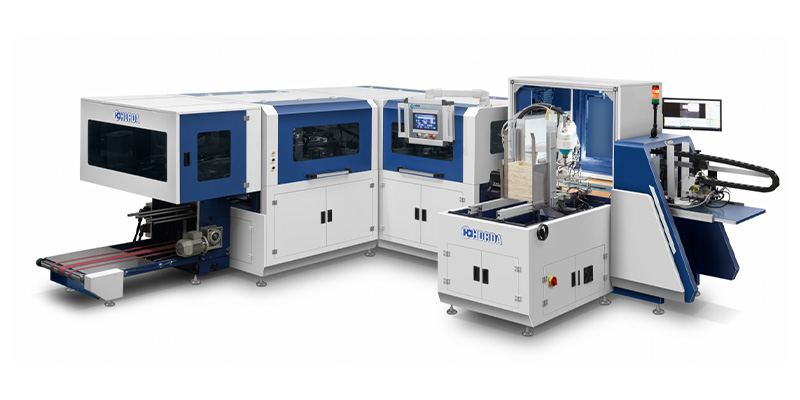
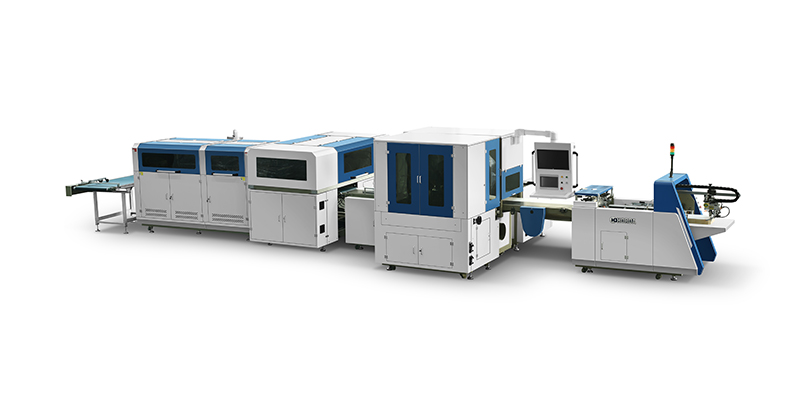
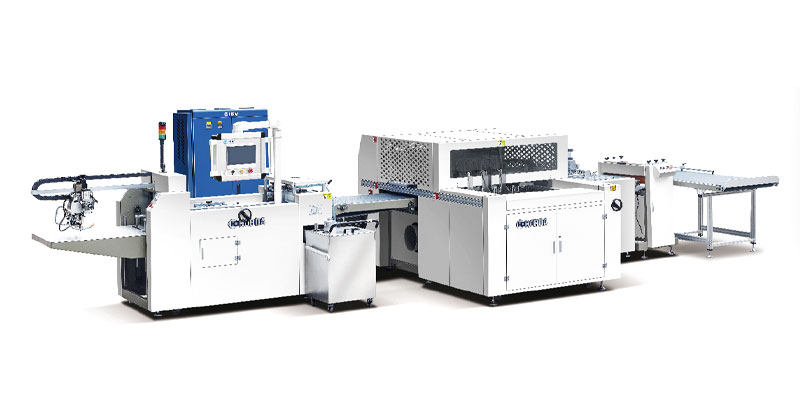
A rigid box machine is specialized equipment used to manufacture rigid paperboard packaging through gluing, positioning, wrapping and folding. It typically processes greyboard and decorative cover paper to produce sturdy, precisely finished packaging. Conventional rigid box equipment is used to manufacture boxes that retain their assembled shape, while newer foldable rigid box making machines produce collapsible structures that can be folded flat for shipping and storage and quickly erected when needed.
In manufacturing, rigid box machine is a broad term rather than the name of one fixed machine. It can refer to equipment that performs a particular operation, a machine combining several manufacturing functions, or an integrated production line. The actual processing scope depends on the equipment configuration and the structure of the finished product.
What Does a Rigid Box Machine Do?
A rigid box machine automates one or more operations involved in converting greyboard and decorative cover paper into rigid packaging. Depending on its design, the machine may prepare materials, manufacture flat cases, form three-dimensional box shells, wrap decorative paper around the board or assemble separately prepared components.
For conventional rigid boxes, production generally involves preparing the greyboard, forming the required box structure, applying adhesive to the cover paper and accurately positioning the board or box shell before wrapping and folding. Further operations may include inner lining, pressing, magnet insertion or the assembly of separate components.
Book-style boxes and hardcover products follow a somewhat different process. Their hinged covers are typically produced as flat cases by positioning multiple greyboard pieces on decorative cover paper and folding the paper edges inward. A book-style box then requires an inner tray to be manufactured and attached to the finished case.
Collapsible rigid boxes share certain processes with conventional rigid packaging, but their folding structures require specialized preparation and assembly. These additional operations allow the finished box to collapse into a flat form and return to its assembled shape.
*A rigid box machine does not necessarily produce a complete box. Depending on its functions, the finished output may be a flat case, a formed box shell, a wrapped component or a fully assembled product.
How Does a Rigid Box Machine Work?
There is no single production sequence that applies to every rigid box machine. The manufacturing process depends on the box structure, the materials being processed and whether the factory uses individual machines or an integrated production line. However, most rigid box manufacturing involves several related stages.
Material Preparation and Board Forming
Production begins with greyboard cut to the required dimensions. Depending on the finished product, the board may undergo grooving, die-cutting or other preparation before entering the next manufacturing stage.
For conventional three-dimensional boxes, prepared board blanks may be folded and corner-pasted to create the required box shells. For book-style boxes and hardcover cases, separate board pieces are arranged with defined spacing to form a flat, hinged structure.
Gluing, Positioning and Wrapping
Decorative cover paper is fed into the machine and coated with adhesive. The prepared greyboard or box shell is then positioned onto the glued paper. Accurate positioning helps maintain consistent margins, panel spacing and alignment, particularly for products made from multiple board pieces.
The cover paper is wrapped around the board or box shell, and its edges are folded inward and pressed to complete the covered component. Some machines combine gluing, positioning, wrapping and four-side folding into one automated process, while others perform these operations separately.
Lining, Assembly and Finishing
After wrapping, some products require additional operations. Inner lining may be applied to cover exposed board surfaces, while separately manufactured components may need to be joined to create the finished box.
For example, book-style rigid boxes require the inner tray to be attached to the case. Other products may require magnet insertion, lidding or the assembly of specialized structural components.
Collapsible rigid boxes require additional attention to their folding joints and connecting structures. Depending on the design, production may involve folding-wing preparation, case making, lining and assembly. These operations can be carried out by dedicated machines or coordinated within a specialized production system.
*The complete manufacturing process may involve several machines. A fully automatic machine can automate its own operations without necessarily covering every stage required to produce the finished box.
What Are the Different Types of Rigid Box Machines?
Rigid box manufacturing equipment is described using several terms, including rigid box making machine, case making machine, forming machine, assembly machine and production line. These names can be confusing because some refer to a general equipment category, others describe a particular manufacturing function, and some represent several connected processes.
For example, a machine sold as a rigid box making machine may combine gluing, positioning, wrapping and folding, while another machine with a similar name may focus on a different stage of production. The following comparison explains the typical meaning of each term.
| Equipment / Term | Main Function | Typical Output |
|---|---|---|
| Rigid Box Making Machine | A broad term for equipment that performs one or more rigid box manufacturing operations. | Depends on the machine configuration. |
| Case Making Machine | Positions greyboard pieces on cover paper and completes wrapping and edge folding. | Flat covered-board cases. |
| Rigid Box Forming Machine | Creates or finishes the three-dimensional shape of a rigid box. | Formed or wrapped box shells. |
| Rigid Box Assembly Machine | Joins separately prepared components to complete the required box structure. | Assembled box components or finished boxes. |
| Rigid Box Production Line | Connects multiple manufacturing operations within a coordinated production process. | Components or finished boxes, depending on the included equipment. |
Rigid Box Making Machine
Rigid box making machine is a general term for equipment used in rigid box manufacturing. Its meaning depends on the manufacturer's product classification and the functions included in the machine.
For example, an automatic rigid box making machine may integrate paper feeding, gluing, multi-board positioning and four-side folding to produce covered-board cases. Other equipment may combine forming, wrapping or additional manufacturing operations.
When comparing rigid box making machines, the important consideration is not simply the product name but which operations are automated and what the machine produces.
Case Making, Forming and Assembly Machines
Case making, forming and assembly describe different manufacturing activities, although a single machine may combine more than one of these functions.
A case making machine produces flat covered-board cases by positioning prepared greyboard pieces on decorative cover paper and folding the paper edges inward. These cases are commonly used for book-style boxes, hardcover books, folders and certain collapsible rigid box structures.
A rigid box forming machine creates or finishes the three-dimensional shape of a rigid box. Depending on the equipment, forming may refer to erecting a prepared board blank into a box shell or wrapping and pressing an already formed shell. Manufacturers may use the term differently, so the actual processing operations should be confirmed.
A rigid box assembly machine joins separately prepared components. Typical applications include attaching an inner tray to a book-style case, assembling shoulder-box components or joining the prepared parts of a collapsible rigid box.
For a book-style rigid box, case making may produce the hinged cover, forming may produce the inner tray, and assembly may join the two. These operations can be performed by separate machines or combined within a coordinated production system.
Specialized Machines Used in Rigid Box Manufacturing
Rigid box production may also involve specialized equipment for individual manufacturing operations. A grooving machine prepares greyboard by cutting controlled folding grooves, while a corner pasting machine erects prepared blanks and secures their corners to form box shells.
Gluing and positioning machines prepare cover paper and align it with the board or box shell. Wrapping machines complete the decorative covering process, including folding the paper around the edges of the prepared component.
Depending on the product, additional equipment may be used for magnet insertion, inner lining, lidding or other finishing operations. These machines can operate independently or become part of a larger manufacturing system.
Rigid Box Production Line
A rigid box production line is a coordinated arrangement of manufacturing processes rather than one fixed machine type. It may consist of several independent machines connected by material transfer equipment or an integrated system containing multiple processing stations.
For example, a production line may combine case making and inner lining, or connect forming, wrapping and assembly operations. However, a production line does not automatically include every stage of rigid box manufacturing. Its actual scope depends on the equipment configuration and the product it is designed to manufacture.
*Machine names may overlap. To understand the actual function of any rigid box machine, check its input materials, processing operations and finished output.
What Types of Boxes Can Rigid Box Machines Produce?
Rigid box machines are used to manufacture a variety of premium packaging structures and hardcover paperboard products. Although many of these products use similar structural materials, their manufacturing processes differ according to how the board is formed, covered, folded and assembled.
Conventional rigid box equipment is commonly used for lid-and-base boxes, drawer boxes, book-style boxes and hardcover cases. Specialized foldable rigid box equipment extends production to collapsible structures that can be transported flat and quickly erected when needed.
| Product Type | Structure | Typical Manufacturing Requirements |
|---|---|---|
| Lid-and-Base Boxes | Separate lid and base. | Separate forming and wrapping of both components, with optional lidding. |
| Drawer Boxes | Sliding inner tray and outer sleeve. | Tray production, sleeve manufacturing and final assembly. |
| Book-Style Boxes | Hinged cover with an attached inner tray. | Case making, tray production, lining and assembly; optional magnet insertion. |
| Hardcover Cases | Flat covered-board structures with defined folding joints. | Multi-board positioning, gluing, wrapping and edge folding. |
| Collapsible Rigid Boxes | Rigid panels connected by specialized folding structures. | Specialized case making, folding-wing preparation, lining and assembly, depending on the design. |
Conventional Rigid Boxes and Hardcover Products
Conventional rigid boxes generally retain their assembled shape during storage and transportation, but their structures and manufacturing requirements are not identical.
Lid-and-base boxes require two separately manufactured components. Drawer boxes combine a sliding inner tray with an outer sleeve, while book-style boxes use a hinged case that is joined to an inner tray. These differences determine whether production requires forming, wrapping, case making, assembly or a combination of these operations.
Case making equipment can also be used for hardcover books, folders, presentation cases, desk calendars and other covered-board products. These products often begin as flat cases made from multiple greyboard pieces, rather than three-dimensional box shells.
Collapsible Rigid Boxes
Collapsible rigid boxes are designed to combine the sturdy appearance of conventional rigid packaging with a flat-pack structure. Their rigid panels are connected by folding joints, wings or other specialized components, allowing the finished box to fold flat and return to its assembled shape.
These structural differences create additional manufacturing requirements. Depending on the box design, production may involve case making, folding-wing preparation, lining and component assembly.
Dedicated foldable rigid box making machines are developed for these specialized processes. Their actual functions and supported box structures depend on the machine configuration.
*Not every conventional rigid box machine can produce collapsible rigid boxes. The required folding structure and assembly process must be considered when selecting equipment.
How to Choose the Right Rigid Box Machine
Choosing a rigid box machine starts with the finished product rather than the machine name. Different box structures may share certain manufacturing operations, but they do not necessarily require the same equipment.
Identify the Finished Box Structure
First, determine whether the factory intends to manufacture conventional lid-and-base boxes, drawer boxes, book-style boxes, hardcover cases or collapsible rigid boxes. The finished structure determines which manufacturing operations are required.
For example, book-style packaging may require case making, inner tray production and assembly, while collapsible rigid boxes may require specialized equipment for folding-wing preparation and related operations.
Confirm the Required Manufacturing Processes
Next, identify which processes need to be automated. A factory may require only one specialized machine to improve an existing operation, or it may need an integrated production line connecting several manufacturing stages.
For manufacturers expanding an existing facility, this assessment also helps determine which current machines can be retained and where additional equipment is necessary.
Check Material Compatibility and Processing Range
Machine specifications should be compared against the actual materials and dimensions of the intended products. Important factors include greyboard thickness, cover paper specifications, minimum and maximum processing dimensions, and the number of board pieces the equipment can handle.
For book-style and collapsible rigid boxes, panel spacing, folding joints and component arrangements may also affect machine compatibility.
Evaluate Production Capacity and Positioning Accuracy
Production speed should be evaluated together with box size, material properties, product complexity and the capacity of connected equipment. The maximum stated speed of an individual machine does not necessarily represent the output of the complete production process.
Positioning accuracy is especially important for products with multiple board pieces, narrow margins or precisely aligned folding structures. When comparing equipment, manufacturers should confirm which operation the stated accuracy refers to.
*Before comparing machine models, confirm what materials enter the machine, which operations it performs and what finished or semi-finished product comes out. These three questions help distinguish individual machines from integrated production systems.
Frequently Asked Questions
Is a rigid box machine the same as a rigid box making machine?
These terms are often used interchangeably as general names for rigid box manufacturing equipment. However, they do not guarantee the same processing functions. The actual operations and finished output should be confirmed for each machine.
What is the difference between a rigid box forming machine and an assembly machine?
A rigid box forming machine creates or finishes the three-dimensional shape of a box, while an assembly machine joins separately prepared components. Some equipment may combine both functions, depending on its configuration.
Can one rigid box machine produce different types of boxes?
Some rigid box machines can manufacture multiple box sizes or structures within their supported processing range. However, different products may require additional tooling, specialized modules or separate equipment. Machine compatibility must be confirmed for each intended box structure.
Can a conventional rigid box machine produce collapsible rigid boxes?
Not necessarily. Conventional equipment may share certain manufacturing processes with collapsible rigid box production, but specialized folding-wing preparation and assembly operations may be required. The answer depends on the finished box design and the machine configuration.
Is a fully automatic rigid box machine a complete production line?
No. Fully automatic describes the automation level of the operations included in a machine. A complete production line may require additional equipment for board preparation, forming, lining or assembly.
What is the difference between a case making machine and a rigid box making machine?
A case making machine is designed to produce flat covered-board cases, while rigid box making machine is a broader term that may describe equipment performing various rigid box manufacturing operations. The exact distinction depends on the manufacturer's equipment classification.
Conclusion
Rigid box machine is a broad term covering equipment used to manufacture conventional rigid boxes, hardcover cases and newer collapsible rigid packaging. Some machines perform individual operations, others combine several manufacturing functions, and production lines connect multiple processes to produce the required components or finished products.
Understanding the differences between case making, forming, wrapping, assembly and integrated production lines makes it easier to identify suitable equipment. The most important considerations are the finished box structure, material specifications, required manufacturing operations and production capacity.