
How to Make Rigid Boxes With Narrow Edges Using an Automatic Machine
To make narrow-edge rigid boxes automatically, choose a machine that supports the smallest side board, then verify board placement, paper allowances and folding performance with actual samples.
For case-making equipment, the key dimension is often the width of an individual panel in the flat cover layout. A finished box may fit the machine’s overall size range while containing a side board that is too narrow to process.
What Is a Narrow-Edge Rigid Box?
In automatic case making, a narrow-edge design contains a slim greyboard side panel that must be fed, positioned and wrapped within the machine’s limits. It may form part of a book-style cover, closure flap or another multi-panel structure.
“Narrow edge” is not a universal size category. Describe it with a structural drawing and actual panel dimensions.
Keep These Dimensions Separate
- Side-board width: The width of the individual greyboard panel.
- Joint gap: The space between adjacent board pieces.
- Paper turn-in: The cover-paper margin folded around an outer board edge.
A machine’s minimum side-board width does not specify its minimum paper turn-in or guarantee compatibility with every panel arrangement.
Why Are Narrow Edges More Difficult to Process?
Narrow panels provide less room for handling, placement and paper folding, so small dimensional or positioning errors can have a greater effect on the result.
- Handling area: The feeder or placement mechanism must hold the slim board reliably.
- Placement variation: A small shift can noticeably change the joint gap or available paper margin.
- Folding space: The mechanism must turn the paper without disturbing the panel or bunching material near adjacent features.
- Material buildup: Overlapping paper at the corners can occupy a significant part of a narrow panel.
Board thickness matters too. A narrow, thick panel presents different wrapping conditions from a panel of the same width made from thinner board.
What Is the Minimum Side-Board Width of a Rigid Box Machine?
The minimum side-board width is model-specific and must be checked separately from overall case size and minimum spine width.
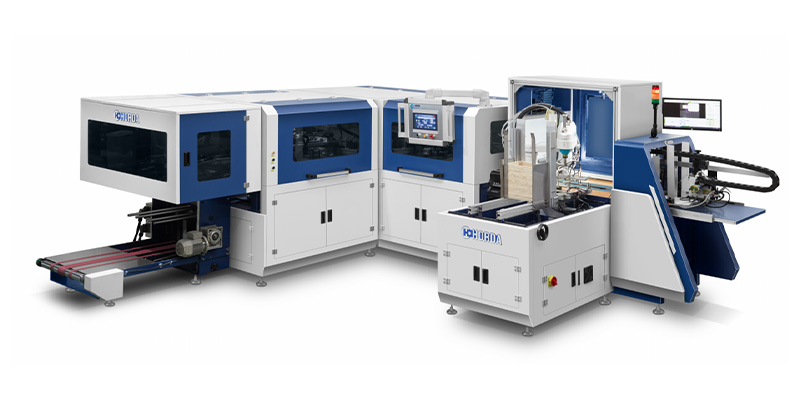
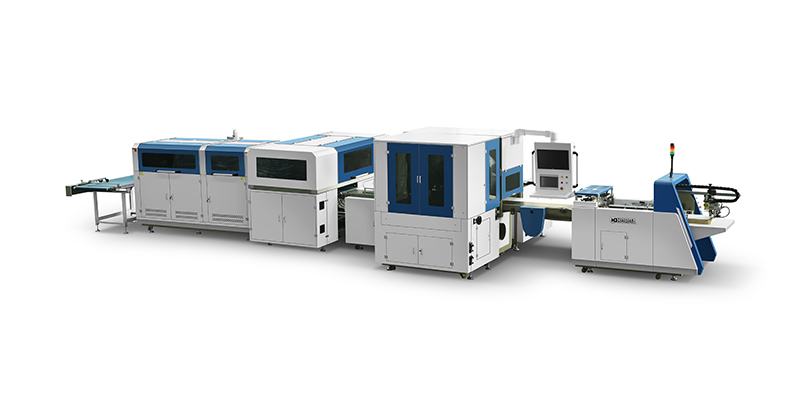
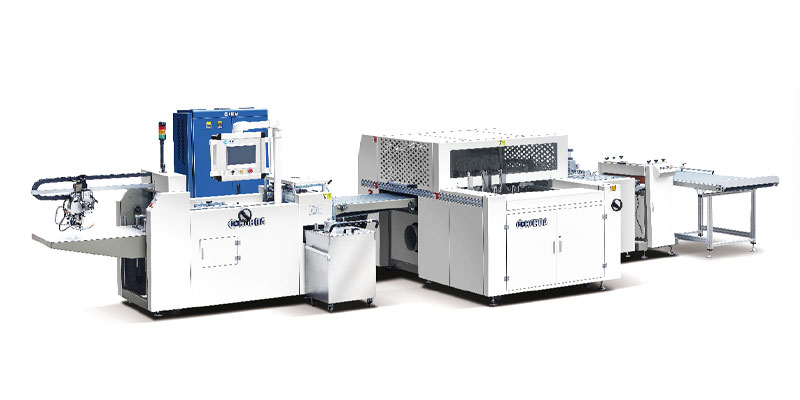
HORDA publishes the following minimum side-board widths:
- ZFM-700D: 18 mm.
- ZFM-1000H: 18 mm.
- ZFM-700H: 25 mm.
These specifications identify a dimensional capability, not approval of every design at that width. Board thickness, panel length, layout, covering material and folding requirements must also be compatible.
When comparing HORDA’s rigid box making machines, review the individual panel limits alongside the complete flat-case dimensions. Do not apply an 18 mm specification to the entire product range.
How Does Board Positioning Affect Narrow-Edge Wrapping?
Accurate placement keeps the narrow panel aligned with the covering sheet and maintains the intended gap to neighboring boards. A panel that shifts or rotates can create uneven coverage and a joint that does not fold correctly.
Inspect the positioned assembly before edge folding. Check the panel at both ends, since one measurement can miss a skewed board.
- Panel location: Is the board placed according to the drawing?
- Squareness: Are its edges aligned with the intended reference?
- Joint spacing: Is the gap consistent along its length?
- Transfer stability: Does the panel remain in place before and during folding?
Servo motion and suitable detection can support repeatability. They cannot compensate for every variation in board cutting, gripping or paper condition.
How Should Paper Allowances Be Set for Narrow Edges?
Set the cover-paper allowance from the complete board layout, board thickness and required reverse-side bonding area. Confirm that the folded paper does not interfere with nearby joints or corner overlaps.
Too little paper can leave exposed board or weak turn-ins. Excessive paper can create bulky corners, extend into a joint or interfere with subsequent lining.
- Measure the flat layout with all board pieces and gaps included.
- Account for paper travel around the board thickness.
- Check corner cuts against the actual material and folding method.
- Inspect the folded margins on the reverse side before applying lining.
Use a trial sample to establish the allowance. A standard paper margin from a wider-panel job may not suit the narrow-edge structure.
Which Machine Features Help Process Narrow Edges?
Useful features include compatible small-board handling, controlled positioning, stable case support and folding mechanisms that can reach the required edges. Their value depends on the actual configuration.
Board Handling
The feeding and placement components must hold the narrow panel without unreliable pickup or movement.
Positioning Control
Suitable references and controlled motion help maintain panel location, squareness and joint gaps.
Folding Access
The folding geometry and adjustment range must suit the panel width, thickness and surrounding layout.
HORDA describes dual-head edge folding on the ZFM-700H/1000H series for narrow side boards and varied board combinations. The applicable minimum width still differs between the two models.
Also check adhesive coverage and pressing contact on the narrow section. Additional folding capability does not replace suitable bonding conditions.
How Do You Set Up Narrow-Edge Production?
Approve the material layout first, stabilize board placement, then adjust wrapping and verify the complete case.
- Confirm compatibility. Check each panel dimension, board thickness, joint gap and overall format against the selected configuration.
- Prepare consistent materials. Inspect board cutting, paper dimensions, corner preparation and flatness.
- Set feeding and placement. Verify reliable handling of the narrowest panel and measure the layout before folding.
- Check glue coverage. Confirm suitable adhesive on the bonding areas without excessive squeeze-out.
- Adjust folding. Follow the machine procedure for clearance, travel, timing and pressure.
- Approve the sample. Inspect edge coverage, corners, bonding and opening performance before the full run.
Case making produces the wrapped cover or panel assembly. Tray attachment, closure installation and final box assembly remain separate unless explicitly included.
How Should Narrow-Edge Samples Be Tested?
Run actual production materials continuously and measure accepted output, panel placement, wrapping quality and case function. A single demonstration piece does not establish repeatable performance.
- Use representative designs: Include the narrowest panel and other demanding combinations within the intended range.
- Inspect before lining: Check turn-in width, corner overlap and any paper entering the joints.
- Check after adhesive setting: Inspect lifted edges, panel movement and bonding under the agreed test conditions.
- Test opening and closing: Confirm that the narrow section and adjacent joints function as intended.
- Record interruptions: Note misfeeds, rejects, manual corrections and adjustments.
- Verify restarts: Check samples after replenishment, stops and changeovers.
Establish the operating speed from this trial. A published general speed range should not be treated as a confirmed narrow-edge production rate.
Retain approved samples and record the materials, settings and acceptance criteria. This provides a practical reference for repeat production and equipment acceptance.