
How Fast Is a Rigid Box Machine?
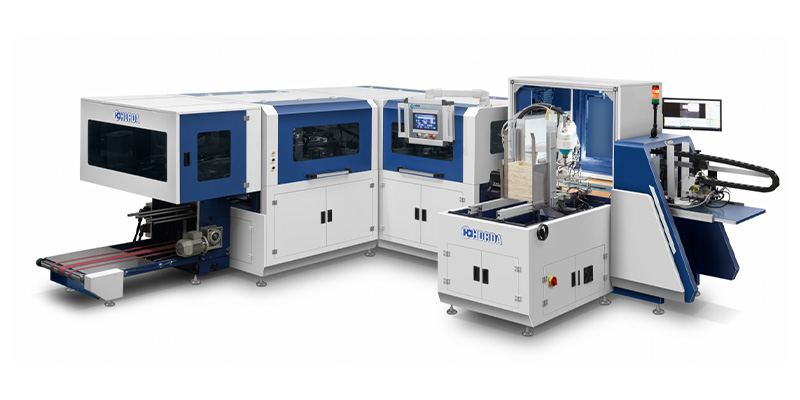
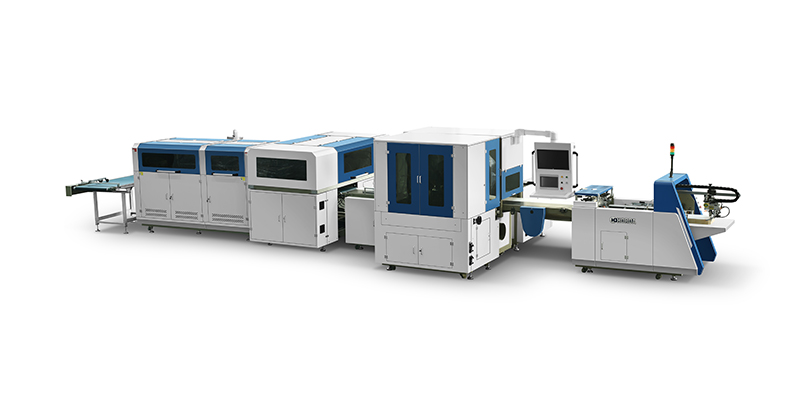
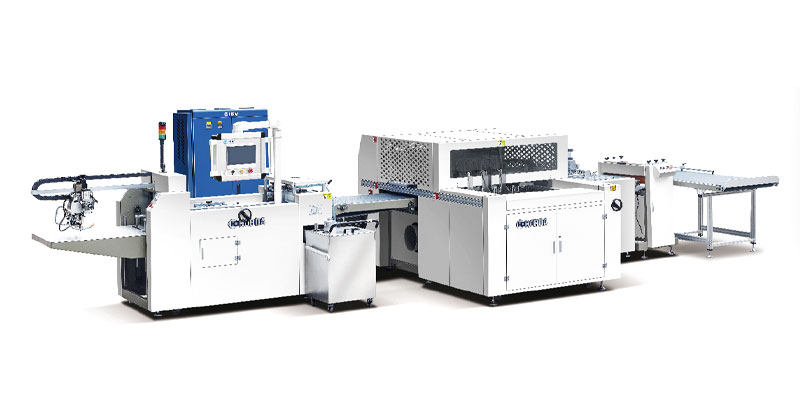
Most automatic rigid box machines are rated at about 20–60 pieces per minute (pcs/min). Semi-automatic equipment typically runs at 10–25 pcs/min, standard automatic machines at 20–40 pcs/min, and high-speed machines at 45–60+ pcs/min. A few specialized systems can reach about 65 pcs/min.
These are market reference ranges, not guaranteed finished-box output. One “piece” may be a flat case, tray, lid, base or wing rather than a complete box. The actual number of qualified finished boxes is normally lower after changeovers, replenishment, stops and rejects are included.
Quick speed guide
Semi-automatic equipment: 10–25 pcs/min
Standard automatic equipment: 20–40 pcs/min
High-speed automatic equipment: 45–60+ pcs/min
Specialized high-speed systems: up to about 65 pcs/min
What Does pcs/min Count on a Rigid Box Machine?
pcs/min means the number of defined units processed during one running minute. Depending on the machine, one piece may mean:
- one flat hardcover case;
- one formed tray, lid or base;
- one collapsible box cover or wing;
- one lined component;
- or one assembled box that has passed inspection.
At a rated 20–60 pcs/min, the machine counter could show 1,200–3,600 pieces during one uninterrupted hour. That does not necessarily mean 1,200–3,600 finished boxes. If one machine makes both the lid and base at 30 components per minute, the theoretical maximum is 15 matched box sets per minute before production losses.
Why Is Actual Rigid Box Machine Speed Lower Than Rated Speed?
Rated speed describes a machine’s stated operating range or maximum cycle rate under suitable conditions. Actual output passes through three practical filters:
Stable running speed: the rate maintained with the actual box, material and settings.
Net run time: shift time remaining after breaks, setup, changeovers, refills and stops.
First-pass yield: the percentage of completed units accepted without rework.
A screen may briefly display 35 pcs/min while the line averages less over the shift. That gap is normal when the job includes feeder loading, glue adjustment, cleaning, minor jams and quality checks. For capacity planning, use sustainable speed and good output—not a short peak.
How Do You Calculate Rigid Box Output per Shift?
Good output = sustainable speed × net run time × first-pass yield
Net run time = shift minutes − planned non-production time − changeover time − unplanned stops
Do not calculate final output by multiplying rated speed by every scheduled minute. First define the finished unit and find the sustainable speed of the slowest required operation.
Example: qualified boxes in one shift
Box: book-style rigid gift box, 210 × 150 × 50 mm
Materials: 2 mm greyboard, 157 gsm coated paper and prepared wrapped inner trays
Conditions: trained crew, stable adhesive, normal replenishment and one changeover
Eight-hour shift: 480 minutes
Time removed: 40 minutes for breaks/cleaning + 30 minutes for changeover + 25 minutes for minor stops/refills
Net run time: 385 minutes
Sustainable bottleneck speed: 18 finished boxes/min
First-pass yield: 97%
Good output: 18 × 385 × 0.97 = approximately 6,722 finished boxes
This is an illustrative calculation. It shows why 35 pcs/min × 480 minutes = 16,800 cannot be presented as final output: that calculation may count cases rather than assembled boxes and ignores all time and quality losses.
What Reduces Rigid Box Machine Output?
The largest production losses usually come from the following conditions:
- Box structure: extra panels, special corners, windows, magnets or multiple components add handling and processes.
- Material behavior: curled paper, variable board, unsuitable glue viscosity or inconsistent blanks can interrupt feeding and bonding.
- Replenishment: paper, board, glue, tape and prepared parts must arrive before machine buffers empty.
- Minor stops: sensor alarms, double feeds, cleaning and small positioning corrections accumulate across a shift.
- Changeovers: tooling, guides, recipes, positioning and trial pieces consume non-running time.
- Rejects and rework: bubbles, exposed board, skewed mounting, loose edges or damaged surfaces reduce good output.
How Does Box Size Affect Rigid Box Machine Speed?
Larger cases and trays often run more slowly because sheets travel farther, heavier parts need controlled acceleration, and feeders hold fewer large blanks. Tall or deep trays also require longer wrapping and turn-in movement. A machine may therefore reach its top speed on a medium rectangular product but require a lower rate near its maximum format or depth.
Very small boxes are not automatically faster. Small board pieces, narrow paper margins and short folds may be harder to pick, position and wrap reliably. Round corners, unusual aspect ratios and multi-panel constructions can affect speed as much as overall dimensions. A useful speed quotation must state the box type, finished size, board thickness and covering material.
How Much Do Changeovers Reduce Rigid Box Capacity?
The effect depends on both changeover duration and batch length. Measure a changeover from the last acceptable old-format piece to stable production of the first acceptable new-format pieces. This includes tooling or mould changes, guide adjustment, feeder setup, recipe loading, glue checks, positioning and trial production.
For example, a 30-minute changeover removes 600 potential component cycles from a machine sustaining 20 pcs/min. The actual loss in finished boxes may differ because component ratios, downstream capacity and startup rejects must still be applied. Several short batches can therefore produce much less per shift than one long batch at the same running speed.
Why Does the Slowest Rigid Box Machine Set Line Output?
A rigid box production line can only deliver finished boxes as quickly as its slowest required process. If case making sustains 30 pieces per minute, tray production supplies 22 trays per minute, and mounting and pressing completes 18 boxes per minute, the line is limited to 18 finished boxes per minute before downtime and rejects.
Buffers can absorb short interruptions but do not change the long-term bottleneck. Component ratios also matter: a lid-and-base box needs two matched parts, while a book-style box may require a case, an inner tray and mounting. Do not add machine speeds together or assume every upstream piece equals one finished box.
How Can You Verify Actual Rigid Box Machine Speed?
Use a representative production trial, not a short peak-speed demonstration. The test should:
- define whether one piece means a case, tray, lid, base, wing or qualified finished box;
- record the box type, dimensions, board, paper, adhesive and special structure;
- use the intended materials and run long enough to include normal replenishment;
- record sustainable speed, gross pieces, good pieces, rejects and rework separately;
- record every stop and measure a representative changeover;
- test every required process when the claimed result is finished boxes rather than components.
The short answer is 20–60 pcs/min for most automatic rigid box machines, with 10–25 pcs/min common for semi-automatic equipment and up to about 65 pcs/min for specialized high-speed systems. The capacity figure to use, however, is the verified number of qualified finished boxes produced under your actual product and shift conditions.