
How to Choose the Right Rigid Box Making Machine
Choose a rigid box making machine by matching its process capabilities to your product structure, size range, greyboard thickness, positioning requirements and target output. Then check material handling, edge folding, changeover time and compatibility with your existing production line. Verify the proposed configuration through a continuous trial using your own materials and box designs.
A Practical Selection Order
Define the required output → Check product and material limits → Calculate capacity → Compare configurations → Test actual samples
What Factors Should You Consider When Choosing a Rigid Box Machine?
Start with the component you need to produce and the operations you want to automate. A wrapped outer case, an inner-lined cover and a fully assembled box require different equipment scopes.
Prepare a finished sample and a structural drawing. Identify the board pieces, flexible joints, covering material and any separate tray, closure or insert.
- Product structure: Standard hardcover, book-style cover, magnetic box cover or another design.
- Required processes: Feeding, gluing, positioning, edge folding, inner lining or assembly.
- Product range: Smallest and largest formats, board layouts and special edges.
- Order pattern: Long repeat runs, short batches or frequent size changes.
- Existing workflow: The stage that currently limits accepted output.
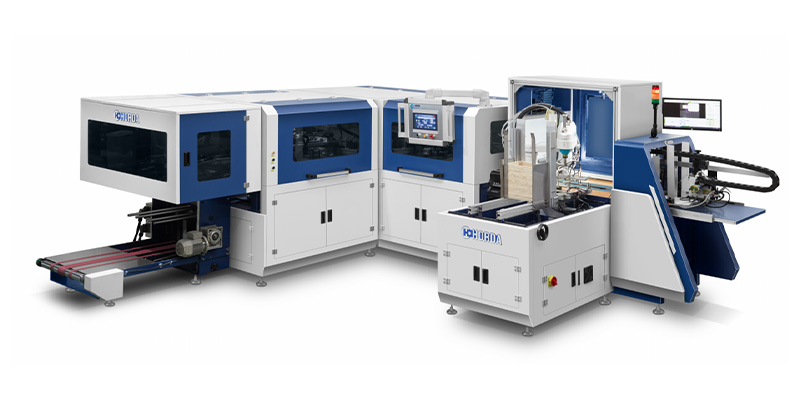
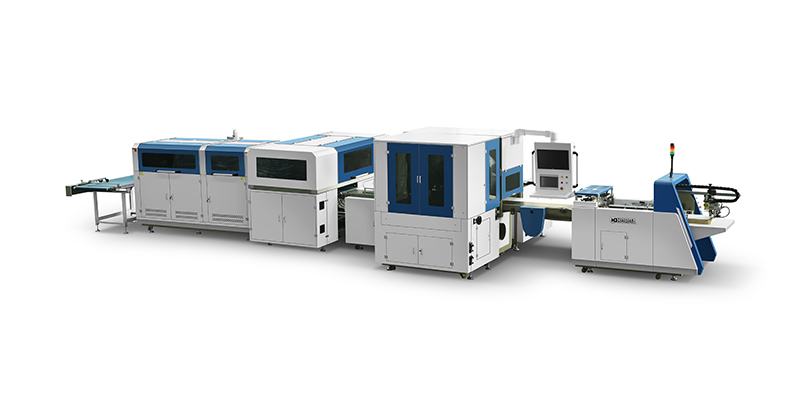
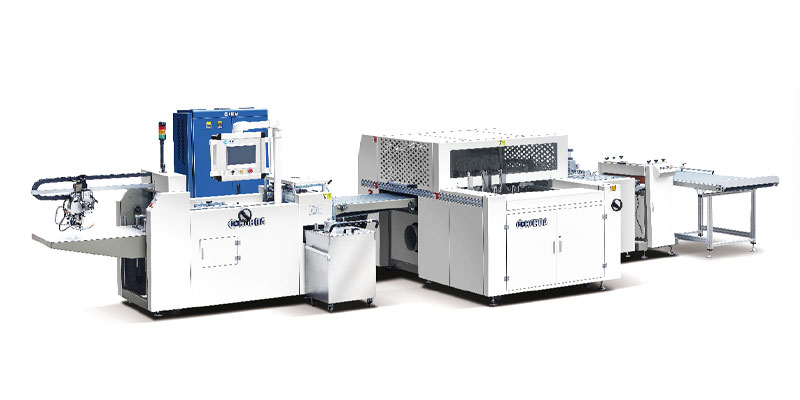
When comparing HORDA’s rigid box making machines, first separate standalone case makers from configurations that also include inner lining. Compare models that deliver the output your factory actually needs.
Which Machine Specifications Matter Most?
The most important specifications are working dimensions, individual board limits, material compatibility, positioning performance and folding capability. Speed becomes useful only after these requirements are satisfied.
Size and Board Layout
Check overall case dimensions, board quantity, board thickness, minimum spine width, side-panel width and permitted joint gaps.
Feeding and Gluing
Verify reliable feeding and bonding with your paper weight, coating, surface finish and specified adhesive.
Positioning Quality
Check board alignment, spacing and registration to printed artwork. Define the reference points used to measure acceptable results.
Folding Capability
Confirm support for narrow turn-ins, round corners, irregular outlines and sensitive covering surfaces where required.
A positioning accuracy figure does not describe the complete finished-case quality. Inspect corner coverage, folded-edge bonding, surface marks and opening performance as well.
How Do Minimum and Maximum Box Sizes Affect Selection?
Both limits matter: a machine that accommodates your largest cover may still be unable to feed or fold its smallest individual panel.
Also confirm what the published dimensions describe. A case maker may specify the flat case size rather than the assembled box’s length, width and height.
- Overall format: Check the complete flat layout in the required feeding direction.
- Small components: Verify narrow spines, closure flaps and side boards separately.
- Folding allowances: Include the paper margins required around the board perimeter.
- Combined limits: Confirm that size, thickness, panel layout and speed requirements can be achieved together.
Example: A cover may fit the overall working area but contain a side panel below the machine’s minimum feeding width. Overall case dimensions alone would not reveal this restriction.
How Much Production Capacity Do You Need?
Calculate capacity from accepted pieces required per shift and the time available to produce them. Allow for changeovers, replenishment, cleaning, stoppages and rejected pieces.
Required Accepted Output per Minute
Required accepted pieces per shift ÷ net running minutes
For example, producing 6,000 accepted cases in 360 net running minutes requires approximately 16.7 accepted cases per minute. This is a planning example, not a machine performance claim.
During testing, measure whether the proposed configuration can sustain that output with your materials. Include a practical allowance for normal production variation, based on your factory’s operating records.
Check the next process too. Faster case making will not increase finished-box output if lining or assembly remains the bottleneck.
Should You Choose a Standalone Machine or an Integrated Line?
Choose a standalone machine when one operation needs improvement; consider an integrated line when connected processes have compatible volumes and product requirements.
- Standalone case maker: Suitable when existing lining equipment has sufficient capacity or cases need to follow different downstream routes.
- Integrated case-making and lining line: Suitable when the same products regularly require both operations and intermediate handling limits production.
- Separate lining equipment: Useful when case making already meets demand but interior finishing needs improvement.
A separate case lining and laminating machine can automate interior finishing without replacing the case maker. For any connected system, check transfer orientation, working height, speed coordination and space for material access.
Case making and lining do not automatically include magnet installation, tray attachment or final box assembly.
How Important Are Changeover Time and Operator Requirements?
They directly affect shift output, especially when the factory runs many short batches. Frequent adjustments can outweigh the benefit of a higher running speed.
Ask for a changeover demonstration between two of your actual products. Measure from the last acceptable piece of the first job to stable acceptable production of the next.
- Which settings can be recalled, and which require manual adjustment?
- How many trial pieces are needed after a size change?
- How many operators are required for setup and normal running?
- Can feeding materials and replenishing adhesive be handled at the required pace?
- How accessible are routine cleaning and maintenance points?
Why Should You Test Your Own Box Samples Before Purchasing?
Your own samples reveal whether the machine can handle the materials, structures and quality requirements you will actually run. A supplier’s standard demonstration sample may not expose those challenges.
Provide enough material for a continuous trial, including a routine product and representative difficult jobs.
- Test the size extremes. Include the smallest panels and largest flat cases.
- Use actual materials. Supply production greyboard, printed or finished covering paper and the intended adhesive specification.
- Check special features. Include narrow edges, round corners or irregular shapes where applicable.
- Record continuous output. Count accepted pieces, rejects, interruptions and operator interventions.
- Inspect the results. Check alignment, joints, corners, surface condition and bonding after the agreed adhesive setting period.
Retain approved samples and the trial records so that delivery acceptance can use the same criteria.
What Should You Confirm Before Placing an Order?
Confirm the exact configuration, demonstrated capabilities and acceptance conditions in writing. The quotation should identify which operations and accessories are included.
- Product coverage: Approved sizes, layouts, materials and special features.
- Performance: Agreed output, quality limits and test conditions for representative jobs.
- Installation: Machine footprint, service clearance, power and compressed-air requirements.
- Operation: Staffing, training, cleaning and maintenance needs.
- Supply scope: Included units, tooling, spare parts and separately priced options.
- Total cost: Equipment, transport, installation, consumables and expected operating costs.
Make the final comparison between configurations that pass your product tests and meet the same output requirements. Their purchase prices then become meaningful alongside labor, changeover time, waste and maintenance costs.