
How Are Rigid Boxes Made?
Rigid boxes are made by cutting thick greyboard into structural parts, forming or arranging those parts, wrapping them with decorative paper, assembling the components and then adding lining, inserts and closures. The greyboard provides strength, while the outer covering creates the printed, colored or textured finish.
Unlike a folding carton, a conventional rigid box is not usually folded directly from one thin printed sheet. It is built from rigid board components. The exact manufacturing sequence depends on whether the product is a lid-and-base box, book-style box, drawer box, collapsible rigid box or another structure.
Rigid Box Manufacturing Process at a Glance
- Confirm the box structure, dimensions and material specifications.
- Cut, die-cut, slit or groove the greyboard into the required components.
- Print, finish and cut the cover paper.
- Form a three-dimensional box shell or prepare a flat case.
- Apply adhesive, position the board and wrap the cover material.
- Add inner lining, trays, sleeves, inserts, magnets or other components.
- Inspect the completed box before packing.
This is a general production framework rather than one fixed recipe. Some components are made separately and joined near the end, while certain processes may be connected in an automated production line.
What Is a Rigid Box Made Of?
Most paper-based rigid boxes combine several materials, each serving a different purpose:
- Greyboard or chipboard: Forms the structural core of the lid, base, tray, sleeve, case or side panels.
- Cover material: May be printed paper, specialty paper, coated paper, kraft paper, textured paper, cloth or another flexible decorative material.
- Adhesive: Bonds the cover paper, lining and assembled components to the board.
- Inner lining: Covers exposed board, folded paper edges, hinge areas or closure components.
- Inserts: Paperboard, molded pulp, foam, fabric-covered supports or plastic trays may hold the product in position.
- Accessories: Magnets, steel plates, ribbons, pull tabs, handles and decorative components may be added when required.
Not every rigid box uses all these materials. The final combination depends on the box structure, product weight, opening method, appearance and protection requirements.
How Is Greyboard Prepared?
Production begins with a structural drawing or dieline that defines the size and position of every board component. The greyboard is then inspected for thickness, flatness and surface condition before being converted into the required shape.
Common preparation methods include:
- Cutting or slitting: Produces rectangular panels for flat cases, sleeves, covers and multi-board structures.
- Die-cutting: Creates shaped blanks, corner reliefs, openings or other structural details.
- V-grooving: Removes part of the board thickness along a controlled line so thick board can fold into a sharp edge.
- Punching or recessing: Prepares positions for magnets, steel plates or other concealed components when required.
V-grooving is not required for every rigid box. A conventional lid or base may use a cut or die-cut blank whose sides are raised and secured at the corners. A book-style case may use several separate board pieces positioned with precise gaps. Collapsible boxes also require controlled spaces between panels so the finished structure can fold.
How Is Cover Paper Prepared?
The cover paper provides the visible surface of the box. It may be printed with brand graphics or used in its original color and texture. Depending on the design, processes such as lamination, foil stamping, embossing, debossing or spot coating may be completed before the paper is wrapped around the board.
The sheet is then cut or die-cut to the correct shape. Its dimensions must include enough material to cover the outer surface, fold around the edges and create clean turn-ins. Corner cuts or relief shapes may also be added to reduce overlapping material.
Paper grain direction, curl, coating, surface strength and adhesive compatibility can affect feeding and wrapping. Printing, surface finishing and paper cutting are therefore normally treated as separate upstream operations rather than functions automatically completed by the box-wrapping equipment.
How Is the Box Shell Formed?
A box shell is the three-dimensional structural body before or during outer wrapping. For many lid-and-base boxes, the prepared board blank is folded upward and its corners are secured with stay tape or adhesive. The shell should be square and dimensionally stable before it moves to the wrapping stage.
A V-grooved blank may instead be folded along its grooves and bonded into shape. This method can create sharply defined edges, but it requires the groove depth and position to match the board thickness and finished dimensions.
Not every rigid box begins with a three-dimensional shell. A book-style or magnetic closure box usually requires a flat case made by positioning separate greyboard panels on cover paper. The inner tray is formed separately and later attached to that case.
How Is Cover Paper Wrapped?
For a three-dimensional lid, base or tray, adhesive is applied to the reverse side of the prepared cover sheet. The shell is positioned on the glued area, and the paper is wrapped around its outer walls. The sides are folded in a controlled sequence, the corners are smoothed, and the remaining paper is turned over the top edges.
The wrapped component may then be pressed to improve surface contact, edge definition and flatness. Accurate positioning is important because even a small shift can produce uneven borders, misaligned graphics or an incorrect appearance when the lid and base are paired.
A flat case follows a different sequence. The cover paper is glued first, separate board pieces are positioned with the required spacing, and the paper is folded around the outside edges. The completed case remains flat until it is lined and assembled with a tray, wings or other structural parts.
In both methods, adhesive amount, positioning, paper tension and folding sequence must be controlled to prevent bubbles, wrinkles, exposed board, loose edges and distorted corners.
When Are Lining and Inserts Added?
Inner lining is generally added after the main wrapping process. It covers exposed board, folded cover edges and selected internal surfaces, creating a cleaner finished appearance.
The exact timing depends on the structure. A flat book-style case is often lined before the inner tray is attached. A lid, base or tray may receive its inner paper after the outer surface has been wrapped. Magnets, steel plates and ribbon anchors are usually installed before the lining that conceals them.
Product inserts are commonly added during final assembly after the main box dimensions and opening action have been checked. The insert may be placed loose, locked into the structure or bonded inside the box. Additional accessories, instruction cards and decorative components can then be added as required.
How Does the Process Change by Box Type?
Lid-and-Base Rigid Box
A lid-and-base rigid box, also called a two-piece or lift-off lid box, requires two separate shells. The lid and base are prepared, formed, wrapped and lined independently. They are then matched to confirm the correct fit and opening resistance.
Book-Style Rigid Box
A book-style rigid box combines a flat hinged case with a separately produced inner tray. The case may contain front, back and spine boards, while the tray forms the product compartment. Magnets or steel plates can be concealed inside the case before lining, after which the wrapped tray is positioned and bonded to the cover.
Drawer Rigid Box
A drawer box consists of an inner tray and an outer sleeve. The tray is formed and wrapped as one component. The sleeve is made separately from wrapped board or a prepared flat case and then closed into shape. A ribbon or pull tab may be attached before the tray and sleeve are fitted together.
Collapsible Rigid Box
A collapsible rigid box uses several rigid panels connected by controlled gaps, flexible joints, side wings, tapes or magnetic parts. The panels are positioned on the cover material, wrapped and lined while the main structure remains flat. Wings and closure components are then added so the box can be folded for shipping and erected before use.
These structures belong to the same general rigid packaging category, but they do not share one identical production route. More terminology differences are explained in Rigid Box Machine Types and Terms Explained.
Which Steps Can Be Automated?
Rigid box production can use manual, semi-automatic or fully automatic processes. Commonly automated operations include:
- Greyboard cutting, slitting, die-cutting or grooving
- Shell forming and corner pasting
- Cover paper feeding and adhesive application
- Board or shell positioning
- Paper wrapping, edge folding and pressing
- Inner paper lining
- Magnet insertion and selected component assembly
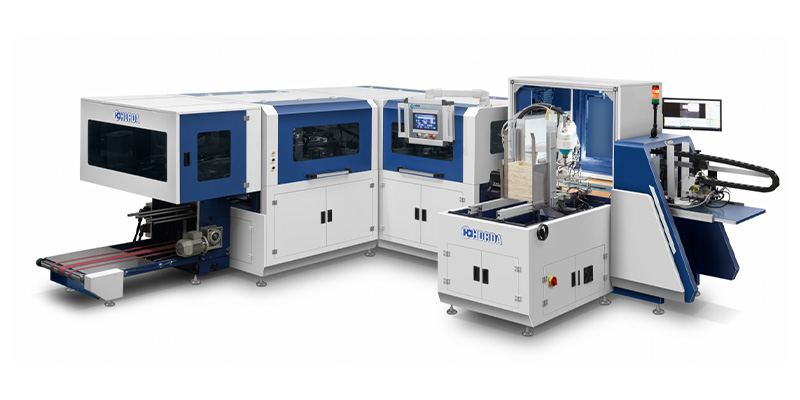
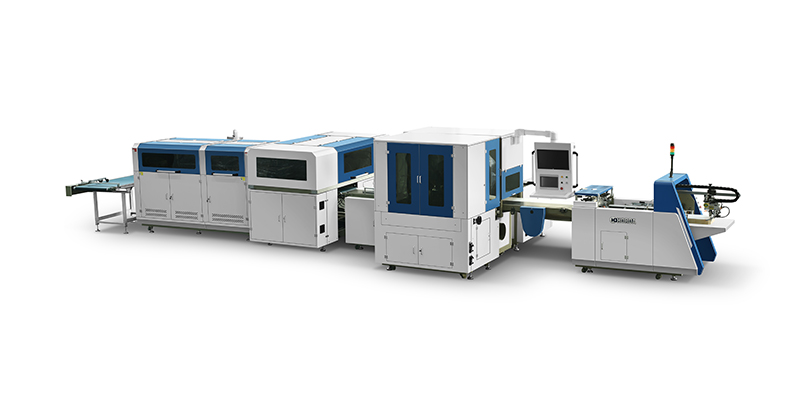
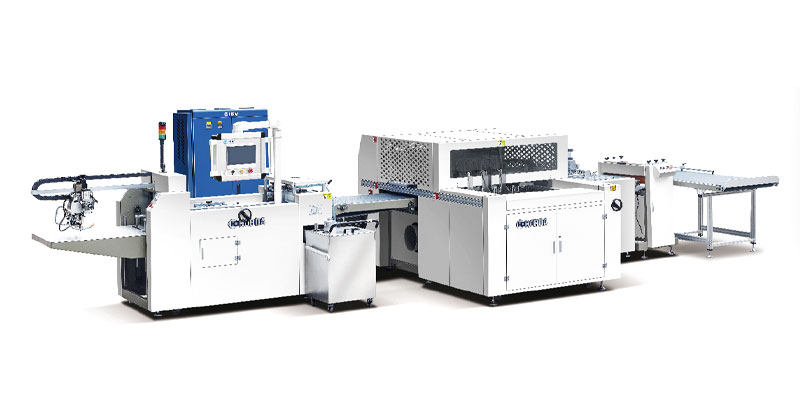
Printing, surface finishing, board preparation, wrapping and final assembly may use different machines or production sections. An integrated line can connect several operations, but this does not mean that one machine automatically completes every stage from raw greyboard to finished packaging.
Special inserts, unusual accessories, small orders and complex custom structures may still involve manual work. For a clearer explanation of machine inputs, processes and outputs, see How Does a Rigid Box Machine Work?
What Is Checked Before the Box Is Packed?
Final inspection normally focuses on the features that affect appearance, fit and use:
- Box dimensions, squareness and structural stability
- Lid-to-base fit, drawer movement or hinge operation
- Printed design and cover-paper alignment
- Corner shape, wrapped edges and turn-ins
- Adhesion, flatness, bubbles and wrinkles
- Surface cleanliness and absence of visible glue marks
- Insert position and product fit
Final Takeaway
Rigid box manufacturing is a sequence of material preparation, structural forming, paper wrapping, component assembly and finishing. Greyboard creates the strength, cover paper creates the visible surface, and lining, inserts and accessories complete the package.
The most important point is that the sequence changes with the structure. Lid-and-base, book-style, drawer and collapsible rigid boxes require different components and assembly methods, so rigid boxes should not be described as products made by one universal process or one all-in-one machine.